Conservation of Historical Frames and Gilded Surfaces
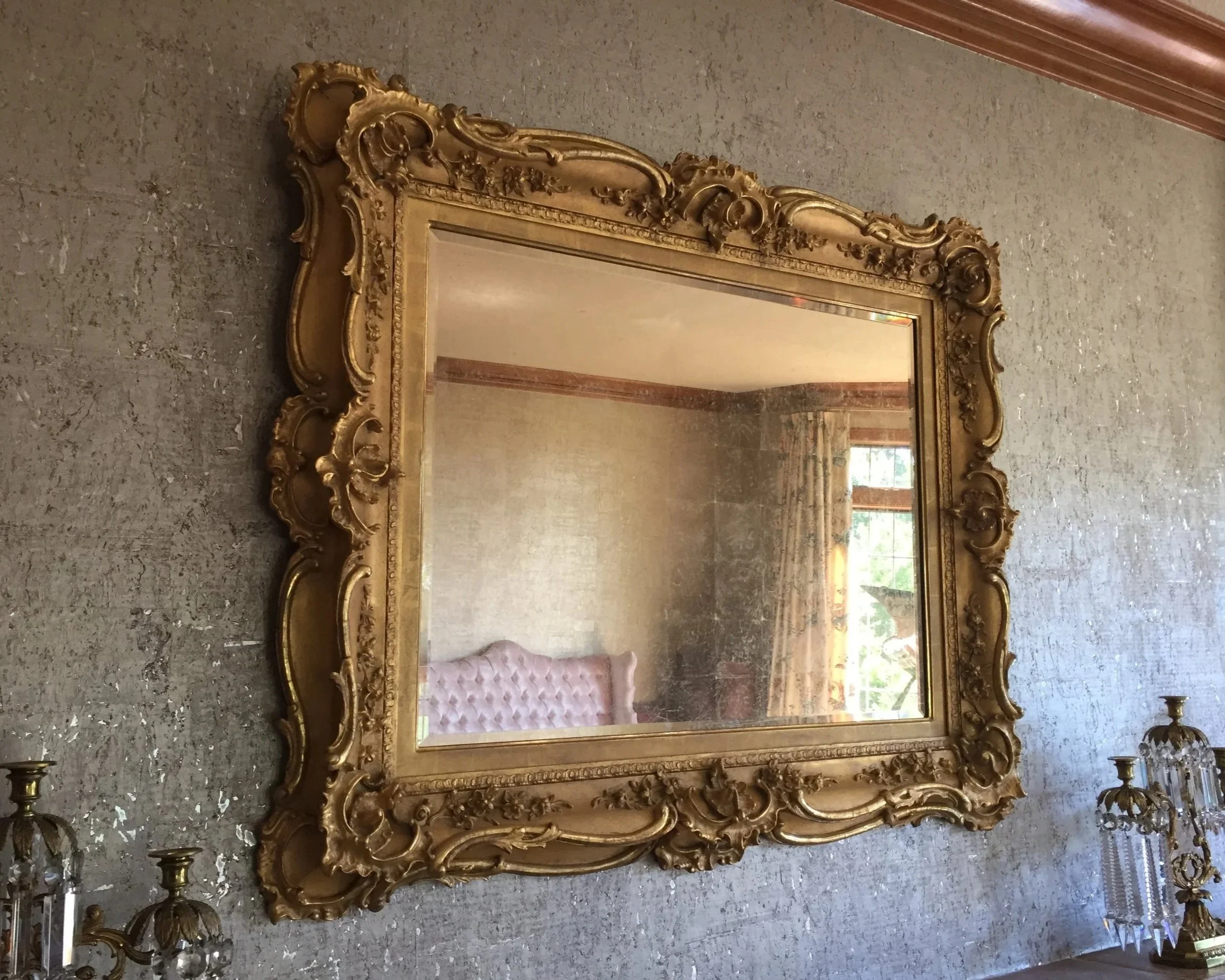
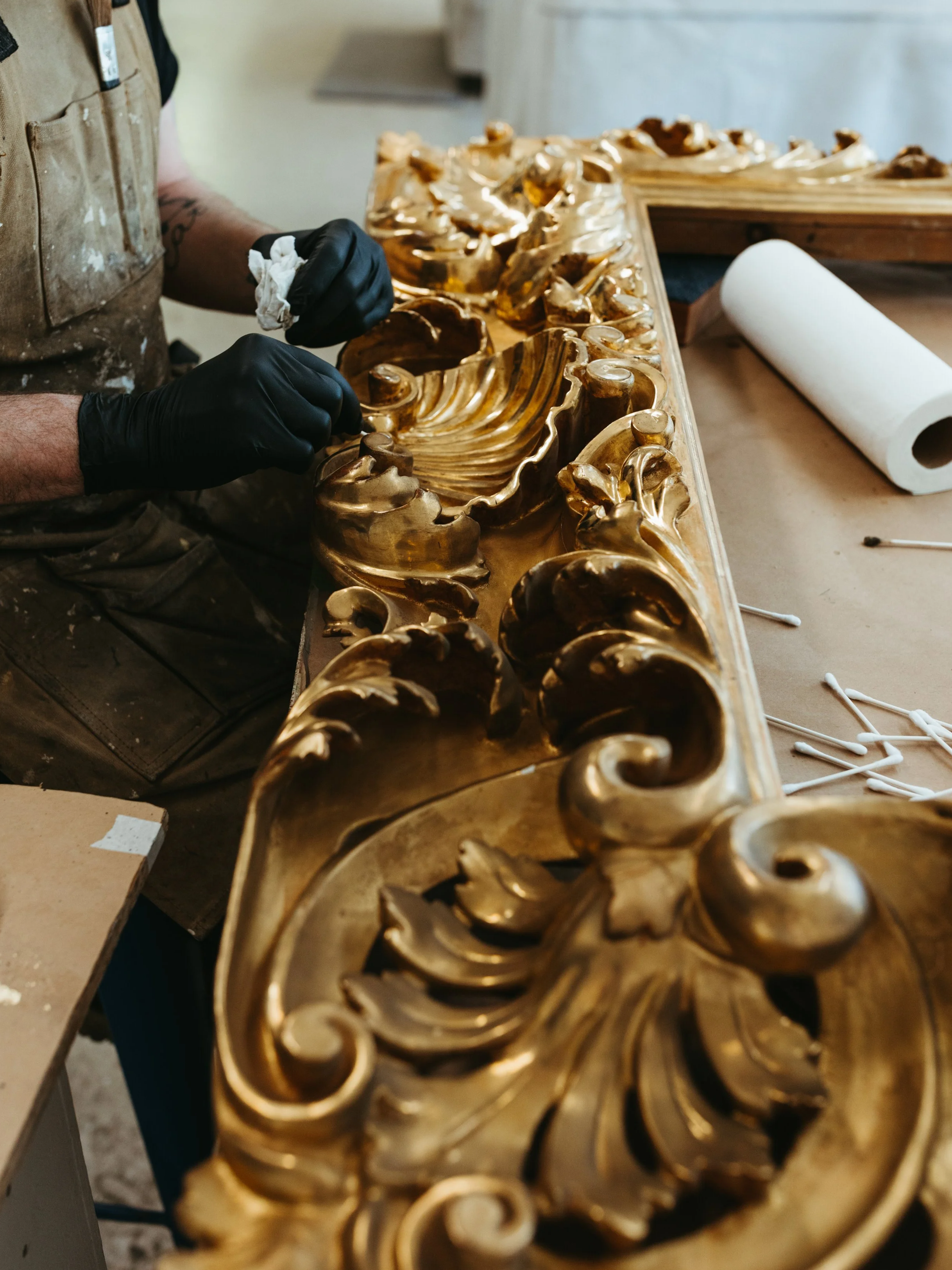
Gold Leaf Conservation is the private practice of Bradley Streeper, dedicated to the study and treatment of historical frames and gilded objects. The work is grounded in material observation, where each object is understood through its construction, surface history, and evidence of change over time. Treatments are informed by direct engagement with the object. Structure, stratigraphy, and previous interventions determine conservation approach.
Conservation Focus and Practice Based Expertise
All Treatments are guided by principles of reversibility, compatibility, and long term preservation.
The studio has been developed through nearly two decades of continuous work with gilded objects and historical frames, in addition to over three decades of experience within museum quality framing and gallery environments. Expertise in direct contact with materials across a wide range of conditions, from intact historical surfaces to heavily altered or structurally compromised objects.
-Stabilization of gilded surfaces and substrates
-Cleaning and reduction of complex surface histories
-Consolidation of gesso and gilding layers
-Loss compensation and ornament repair
Material Understanding as Method
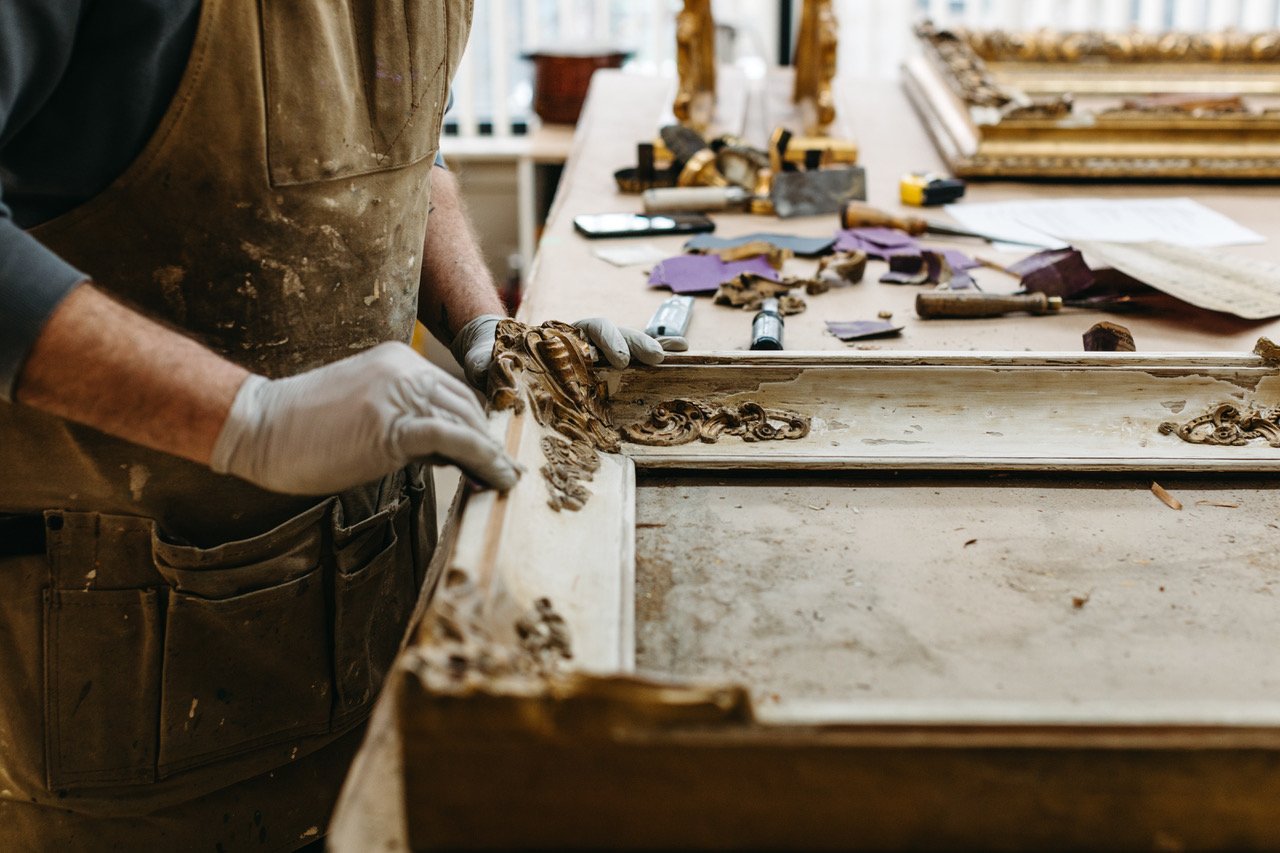
A central aspect of the practice is the ability to accurately interpret gilded surfaces and construction. Distinctions between water gilding, mordant gilding, composite, and imitation finishes are identified not only through appearance, but through material structure and layer interaction.
Frame typologies, regional construction methods, and period-specific techniques are assessed alongside signs of later interventions or modifications. A layered reading informs the conservation approach that allows treatments to address underlying structural and material conditions rather than surface symptoms.
THOUROUGH EXAMINATION CONSIDERS:
-Gesso composition and build
-Bole type, color and function
-Leaf type such as gold, silver or other precious metal and application method
-Substrate construction and joinery
-Evidence of past restoration or intervention
Traditional Materials and Gilding Systems
The practice is informed by an in depth understanding of traditional gilding materials and their behavior over time.
Rabbit skin glue has historically been used as a binding medium in gesso and bole and provides a flexible foundation essential to water gilding.
Gesso is made in house using the same traditional materials, and forms the absorbent ground that allows for burnished gilded surfaces.
Bole, a refined clay layer applied over gesso, serves both structural and visual roles. It creates the layer necessary for burnishing while influencing the warmth and depth of the final gilded surface.
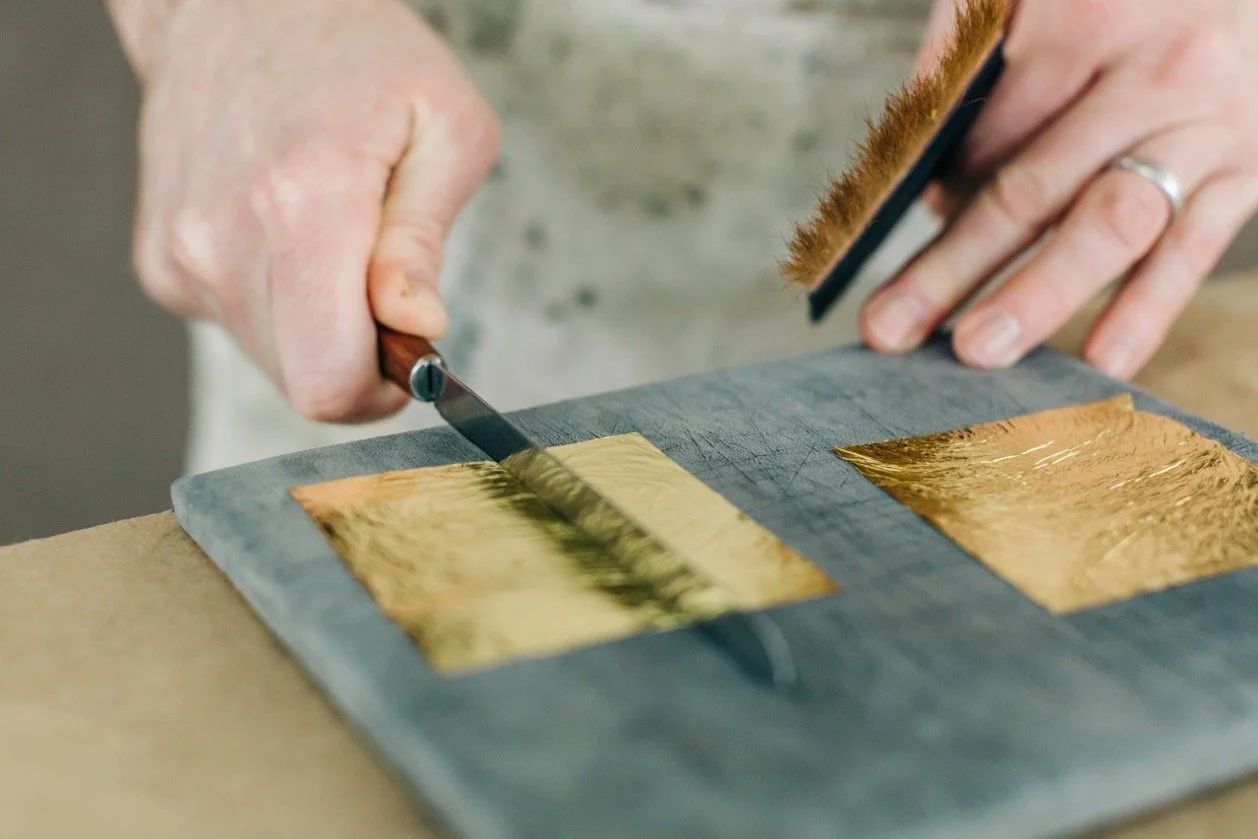
Historical water gilding techniques remain central to both conservation and reconstruction. These systems are understood not only technically, but in the way they produce reflectivity and surface variation.
Additional traditional methods used include pastiglia, raised gesso ornament, as well as sgraffito, punch work and cast composition ornament. Each incorporated where appropriate allowing for accurate reconstruction of missing decorative elements and integration with original surfaces.
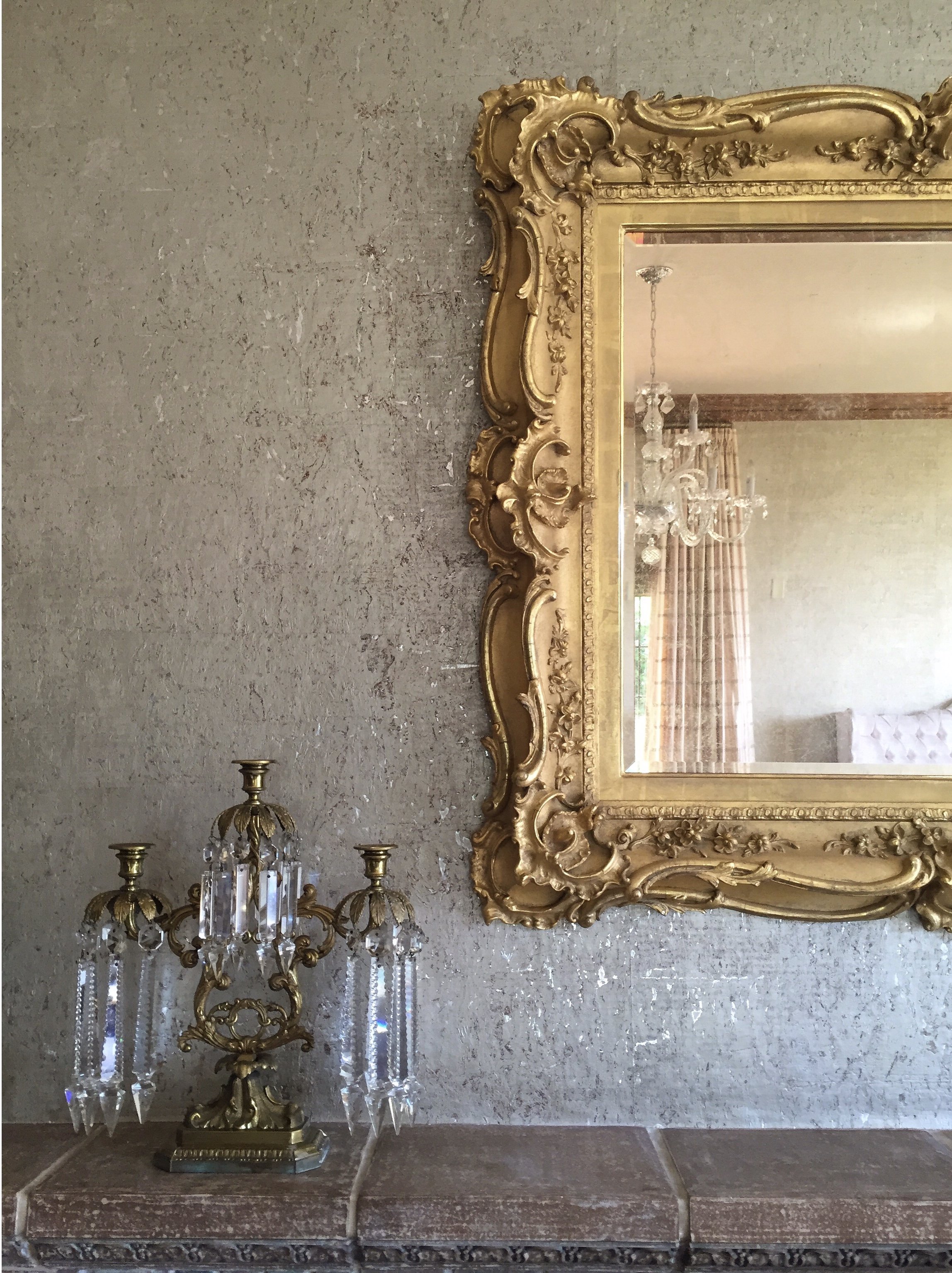
Finishes, Surface Integration, and Patination
Conservation extends beyond stabilization to the visual reintegration of surfaces. Techniques such as toning, selective abrasion, and controlled patination are used to reduce visual disruption while preserving the integrity of original materials. The goal is not replication but coherence. This ensures that areas of loss or intervention align appropriately within the overall surface.
Where necessary, gilded surfaces may be sealed or protected using historically appropriate materials that always prioritize reversibility and long term aging behavior and environment.
Instruction and Professional Training
Teaching is integrated within the conservation practice, supporting the care and stewardship of historical frames and gilded surfaces in institutional collections. Instruction is developed for museums and conservation professionals, combining traditional gilding techniques with established conservation methodologies and ethical standards.
Programs are structured as objects-based intensives that progress through examination, documentation and treatment, from material identification and condition assessment to structural stabilization, surface consolidation, and gilding repair. Instruction is guided by principles of reversibility, compatibility, and long-term stability.
Core areas of instruction include:
Material identification and construction analysis - wood species, joinery, gesso, bole and gilding method.
Condition assessment and documentation using visual examination and material testing.
Structural stabilization and repair, including joinery correction, consolidation of composition ornament, and loss compensation.
Cleaning and consolidation of gilded surfaces using dry, aqueous, solvent, and gel systems in accordance with conservation protocols
Replication of decorative elements through mold-making, casting, and carving, with attention to historical accuracy. Gilding reintegration and surface finishing, including water and oil gilding repairs, burnishing, and traditional and contemporary glazes. Preventive conservation and housing, including environmental packets, handling, and long term care strategies.
Workshops emphasize critical decision-making within an ethical framework, ensuring treatments are appropriate, stable, and reversible. Participants engage directly with traditional materials and conservation systems that develop both analytical and practical skills. They leave with a comprehensive understanding of frame conservation as both a technical discipline and a component of broader collections care.
Institutional collaboration:
Instruction has been developed and delivered for leading institutions, including:
Art Institute of Chicago - Frame Repair and Gilding Conservation.
Center for Collections Care at Beloit College - Traditional Gilding.
Additional teaching includes conservation-focused training programs and intensives for emerging and mid-career professionals with curriculum tailored to institutional needs and collection priorities.